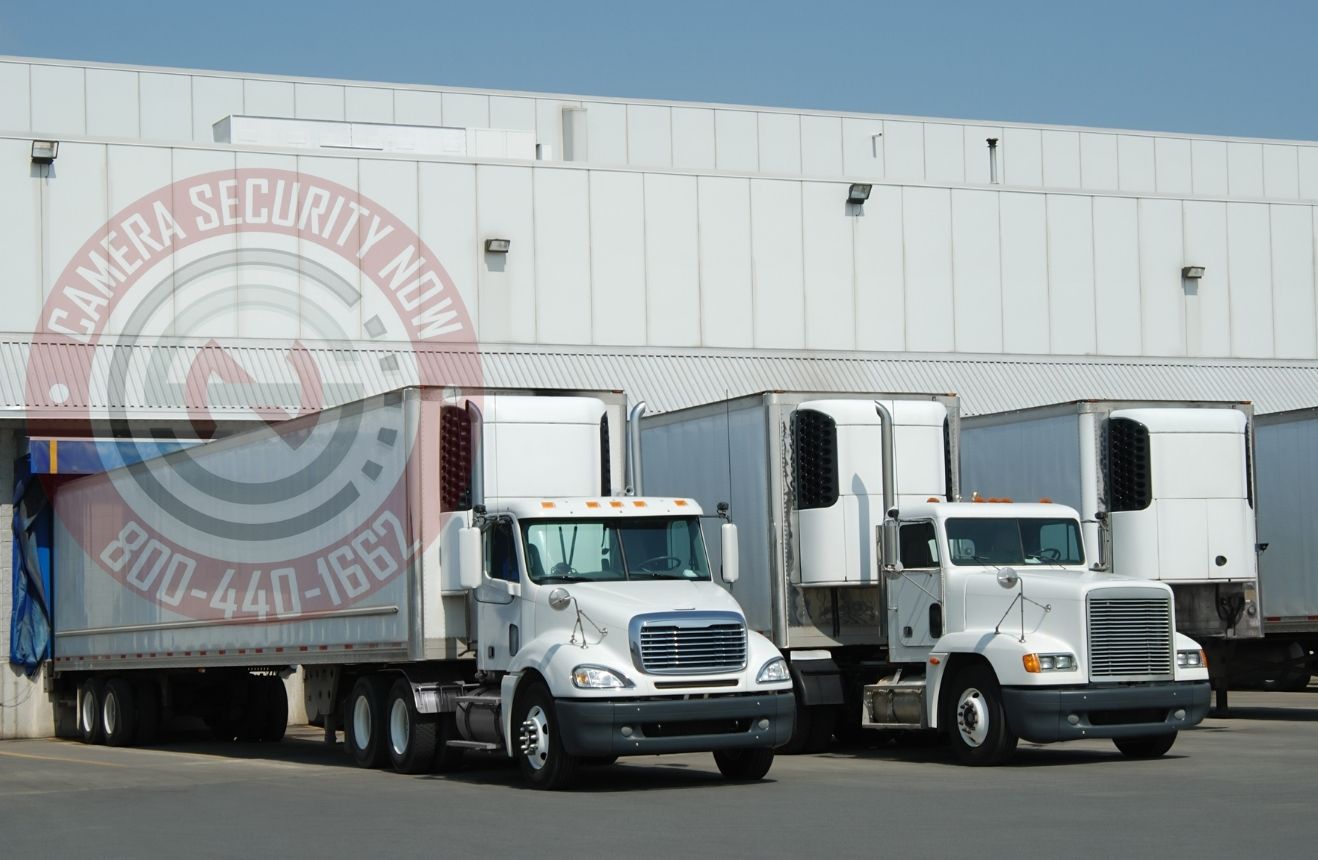
Loading docks are one of the most active areas of a warehouse, and often one of the most difficult to secure.
Employees, truck drivers, contractors, forklifts, trailers, inventory, and delivery vehicles may move through the same area throughout the day. After hours, those same docks can become vulnerable access points for theft, trespassing, vandalism, and unauthorized entry.
For many warehouses and distribution centers, the challenge is not simply recording the loading dock. It is being able to determine who was there, what happened, when it happened, and whether someone should have been there in the first place.
Modern loading dock security can combine commercial security cameras, AI video analytics, license plate recognition, access control, and remote monitoring to provide much better visibility into these high-traffic areas.
Why Loading Docks Are Difficult to Secure
A loading dock is rarely a controlled environment.
Throughout a normal day, a facility may have:
- Employees entering and leaving
- Delivery drivers arriving
- Trucks backing into dock doors
- Trailers being loaded and unloaded
- Contractors accessing the property
- Forklifts moving inventory
- Products temporarily staged outside
- Dock doors opening throughout the day
All of that legitimate activity makes it difficult to distinguish normal operations from a potential security problem.
A person walking near a loading dock at 2:00 p.m. may be completely normal. The same person entering a restricted loading area at 2:00 a.m. may require immediate attention.
That is where newer security technology can provide much more value than simply recording continuous video.
Common Loading Dock Security Risks
Inventory Theft
Products are especially vulnerable while being transferred between a warehouse and a vehicle.
Cameras positioned around loading areas can document when products leave the building, which vehicle they were loaded into, and who was present.
Unauthorized Access
An open dock door can become an unintended entrance into the facility.
Employees, vendors, contractors, and drivers may all require different levels of access. Monitoring these areas helps identify people entering locations where they should not be.
Trailer and Vehicle Activity
Large facilities may have dozens or even hundreds of vehicle movements each day.
Without adequate coverage, determining which truck or trailer was present during an incident can become difficult.
After-Hours Activity
Loading docks that are relatively quiet overnight can become attractive targets for trespassing, theft, or vandalism.
This is an area where intelligent alerts can be particularly valuable.
Accidents and Liability
Loading docks are also active work environments.
Forklift accidents, damaged shipments, vehicle collisions, falls, and other incidents can create liability questions. Recorded video can provide an objective record of what occurred.
Camera Placement Matters
Simply having a camera pointed toward a loading dock does not guarantee useful coverage.
One of the most common security camera mistakes is attempting to cover too much with a single camera.
A wide overview camera may show that something happened, but it may not provide enough detail to identify a person, read a license plate, or determine exactly what was loaded onto a vehicle.
A better loading dock camera design may use several different views.
Wide-Area Coverage
An overview camera can monitor the general loading area, including vehicle movement, employees, trailers, and dock activity.
Dock Door Coverage
Individual cameras positioned near important dock doors can provide closer views of people and inventory entering or leaving the building.
Vehicle Identification
Dedicated cameras can capture vehicles approaching or leaving the property.
For facilities where vehicle identification is important, license plate recognition cameras can automatically capture and record plate information.
Interior Coverage
Cameras inside the warehouse can provide continuity between the loading dock and inventory staging or storage areas.
This creates a clearer visual record of how products move through the facility.
AI Video Analytics Can Make Loading Dock Cameras More Useful
Traditional surveillance systems primarily give businesses footage to review after something happens.
AI video analytics can make those cameras more proactive.
Depending on the system, AI can distinguish between people, vehicles, and irrelevant movement while applying specific rules to different areas of the property.
For example, a warehouse could create alerts for:
- A person entering the loading yard after hours
- Someone crossing into a restricted area
- A vehicle entering through a designated boundary
- Someone loitering near a dock door
- Activity occurring around a closed loading dock
- Vehicles remaining in an area longer than expected
Instead of generating an alert every time something moves, the system can focus on activity that is more likely to matter.
Find Important Video Faster
AI can also change how businesses investigate loading dock incidents.
Traditionally, finding an event could mean manually reviewing hours of recorded footage.
Newer video analytics can make recorded video searchable based on people, vehicles, objects, time, location, and other characteristics supported by the system.
For example, an operator investigating a missing shipment may be able to narrow footage to a specific time period or search for a particular type or color of vehicle.
This can significantly reduce the amount of video that needs to be reviewed during an investigation.
License Plate Recognition for Delivery Vehicles
For warehouses with frequent vehicle traffic, license plate recognition can add another layer of visibility.
LPR cameras can capture plate information as vehicles enter or leave designated areas.
This can help businesses:
- Document delivery vehicles
- Verify arrival and departure times
- Investigate suspicious vehicles
- Track repeat visitors
- Improve gate security
- Search previous vehicle activity
LPR works best when the camera is specifically positioned and configured for license plate capture. A general-purpose overview camera should not automatically be expected to provide reliable plate identification.
Connect Loading Dock Cameras With Access Control
Video surveillance becomes even more useful when it is integrated with access control.
Warehouses can restrict access to:
- Loading dock entrances
- Shipping and receiving offices
- Inventory storage areas
- Employee entrances
- Equipment rooms
- Other restricted areas
When an access event occurs, associated video can help verify who actually entered.
For example, instead of seeing only that an employee credential opened a door at 10:42 p.m., security personnel may also be able to review the corresponding video.
This provides much more context during an investigation.
AI Can Also Provide Operational Insights
Loading dock cameras do not have to be used exclusively for security.
Depending on the analytics platform, video data may also help businesses better understand how their loading areas are being used.
Potential analytics can include:
- Vehicle traffic
- People counts
- Activity by time of day
- Loading-zone dwell time
- Occupancy
- Traffic patterns
- Repeated congestion
- After-hours activity
This turns the surveillance system into another source of operational information.
For example, unusually long vehicle dwell times could indicate a loading bottleneck. Activity reports could show which docks experience the most traffic or when particular areas are busiest.
The available reporting capabilities vary significantly by camera, recorder, VMS, and analytics platform, so these features should be evaluated during system design.
Remote Monitoring Provides Visibility When Managers Aren’t On-Site
Warehouse managers and security personnel cannot always be physically present at every loading dock.
Remote access can allow authorized personnel to:
- View live cameras
- Review recorded footage
- Receive security alerts
- Check dock activity
- Verify deliveries
- Investigate incidents
- Monitor multiple facilities
For organizations operating several warehouses or distribution centers, centralized management can provide visibility across multiple locations from a single system.
You May Not Need to Replace Your Existing Cameras
Adding smarter loading dock security does not necessarily require replacing the entire surveillance system.
Depending on the equipment already installed, businesses may be able to keep existing cameras while upgrading other parts of the system.
That could include:
- Adding cameras to eliminate blind spots
- Replacing only cameras with inadequate image quality
- Installing dedicated LPR cameras
- Upgrading an older NVR
- Expanding video storage
- Improving remote access
- Adding AI analytics
- Upgrading network switches or PoE infrastructure
- Improving cabling or connectivity
AI analytics can sometimes be added through compatible cameras, newer recorders, video management software, servers, appliances, or cloud-connected platforms.
Compatibility matters. Basic video compatibility does not necessarily mean every advanced analytics feature will work between different manufacturers or older equipment.
A professional system assessment can help determine what should stay, what should be upgraded, and what is actually limiting the system.
Don’t Overlook the Network
Camera performance problems are not always caused by the cameras.
Large warehouses may depend on extensive Ethernet or fiber networks to connect cameras located across loading docks, yards, gates, and interior spaces.
Poor connectivity, insufficient PoE power, damaged cabling, overloaded switches, bandwidth limitations, or incorrect network configuration can affect system reliability.
Before replacing equipment, the network infrastructure should be evaluated along with the cameras and recorder.
What Should a Loading Dock Security Assessment Include?
Before designing or upgrading a system, businesses should evaluate:
- Number and location of loading docks
- Dock operating hours
- Vehicle entry and exit points
- Employee and visitor access
- Inventory staging areas
- Existing camera coverage
- Current blind spots
- Nighttime image quality
- License plate identification requirements
- Video retention requirements
- Remote viewing capabilities
- Existing NVR or VMS
- Network and cabling infrastructure
- Access control requirements
- AI detection and alerting goals
- Operational reporting needs
The goal should not simply be to install more cameras. It should be to create useful coverage that addresses the specific risks and operational needs of the facility.
Building a Smarter Loading Dock Security System
Loading docks bring together many of the biggest security challenges facing warehouses: valuable inventory, frequent vehicle traffic, employees, visitors, open doors, and activity that can continue well beyond normal business hours.
A properly designed system can combine commercial security cameras, AI video analytics, license plate recognition, access control, remote monitoring, and reliable network infrastructure to provide a much clearer picture of what is happening around the facility.
And if your warehouse already has cameras installed, improving loading dock security may not require starting over.
CameraSecurityNow.com can evaluate your existing cameras, NVR, network, coverage, and security goals to determine what can be reused and where upgrades would provide the most value.
Whether you’re securing a single loading dock or standardizing surveillance across multiple warehouses and distribution centers, contact CameraSecurityNow.com to discuss your facility and request a customized security solution.
Contact Camera Security Now today to learn more about selecting a surveillance system that delivers the features you need without unexpected expenses down the road.
 At CameraSecurityNow.com, we emphasize not just deploying cutting-edge technology—but doing so securely, responsibly, and with long-term protection in mind.
Because in today’s world, security isn’t just about what you can see—it’s about who else can see it too.
Related reading