Everything You Need To Know About Aspect Ratios
· By Jake Nolan · Installation, Mounting & DIY
Updated July 5, 2018
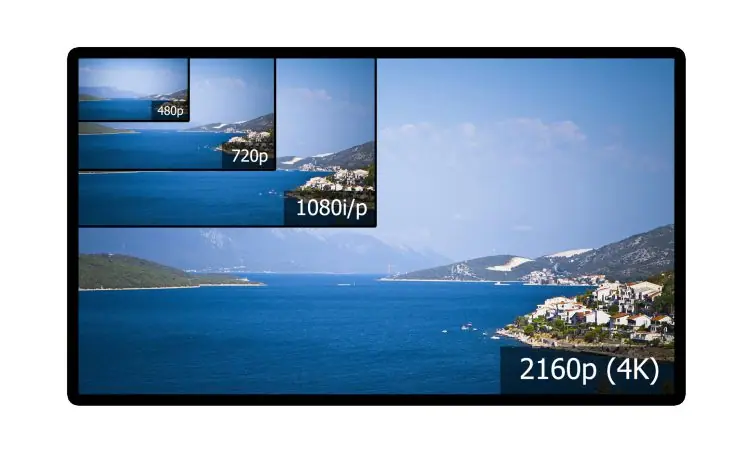
So, you are looking for a good security camera system, or you are looking to upgrade. You have probably checked out different aspect ratios, and you are probably really confused as to what that even means, and which one is the right choice for you. Let me break a few things down for you, my friend.
WHAT IS ASPECT RATIO?
Basically, aspect ratio is the width of a video image compared to its height. The most commonly used aspect ratios, and probably the only ones you will ever need to know about, are 4:3 (also known as “full screen”) and 16:9 (also known as “wide screen”).
Pretty much every old TV that we had way back when had the squashed looking 4:3 aspect ration. Monitors like this can display analog video signals, but not HD video.
16:9 is the aspect ratio used by most high definition LCD monitors. It is 78% wider than it is in length, and 1/3 wider than a 4:3 screen. 16:3 widescreen monitors are best for displaying HD video, but most models will display standard definition as well. This is where things get tricky.
WHICH ONE TO USE, AND MATCHING YOUR VIDEO TO YOUR MONITOR
So… now that you know what aspect ratio is, which one is best for you? That depends. If you haven’t gathered this already from the first section of the article, most modern displays are going to be widescreen. This means that if you have a camera that has the same aspect ratio, you are going to be utilizing everything and getting the most out of your camera and your monitors.
In my personal opinion, 16:9 works out the best anyway. Not only is it the most modern, but you get a better view of a larger area from side to side. With 4:3, you get a taller picture, but let’s face it, a 30 foot tall man probably isn’t going to be breaking into your business, so I’d say a wider view is going to be more practical.
If you try to use a modern widescreen monitor with a 4:3 camera, you’ll either have to:
– Deal with the annoying black bars on the side of the screen
– Zoom in to fill up the whole screen but cut off a ton of the image from the top and bottom
– Stretch the image to fill the screen, and then you will be viewing things in a very odd way that makes every single person look like a really fat and short cartoon character.
None of this is good.
Basically, when dealing with security cameras, I would say that whichever aspect ratio you choose to go with is fine. The most important thing to be sure of is matching your monitors with whatever aspect ratio your camera is shooting. If you do this, you can’t go wrong either way. Just know that most modern monitors will be 16:9, and it’s always best to have up to date tech.
For A Custom Quote On A Security Camera System To Protect Your Home Or Business Call CameraSecurityNow,com Today At 877-422-1907
For More Information Visit Our Camera Security Learning Center